
Fire smoke damage in Clemson, SC turns a familiar home into an unsafe space within minutes, leaving soot on every surface and smoke odor trapped in walls, ductwork, and furniture. The real danger isn't just what you can see char marks and ash but what keeps spreading after the flames are out: acidic soot residue, trapped moisture, and airborne particles that get worse the longer they sit. Here's exactly what happens during professional fire and smoke cleanup, and what to do in the first 24 hours to protect your Clemson property.
24/7 Emergency Fire & Smoke Damage Response in Clemson
Fire damage restoration and smoke cleanup should start within hours, not days. Whether you're near downtown Clemson, the Clemson University corridor, or out toward Lake Hartwell in Pickens County, a fast response limits how far soot and water travel through a structure.
A 24/7 emergency crew typically handles board-up, roof tarping, and initial water removal before secondary damage sets in. If your property is still smoldering or recently extinguished, request emergency service as soon as the fire department clears you to re-enter.
In our crews' experience responding to Clemson-area fires, the single biggest mistake homeowners make is running the HVAC system before smoke residue is assessed. Turning on central air pushes soot and odor-causing particles through every duct in the house, turning a contained kitchen fire into a whole-house odor problem.
Fire & Smoke Damage Assessment: Wet Smoke vs. Dry Smoke
Every fire leaves a different residue pattern, and the cleanup approach depends on identifying it correctly first. The newly published ANSI/IICRC S700 Standard now gives restoration contractors a formal framework for this step. This Standard describes the principles, processes, and procedures for assessing the presence, intensity of impact, and boundaries of fire residues and odors affecting a building, building systems, and contents after a fire event.
| Smoke Type | Cause | Residue Characteristics | Cleanup Challenge |
|---|---|---|---|
| Wet smoke | Low-heat, smoldering fires | Sticky, pungent, smears when touched | Penetrates porous materials deeply |
| Dry smoke | Fast-burning, high-heat fires | Powdery, wipes away easily | Travels farther through HVAC systems |
Severity is generally sorted into three tiers:
- Minor damage light soot confined to one room or area, no structural impact
- Medium damage moderate soot across multiple surfaces, requiring aggressive cleaning and repainting
- Major damage contents, finishes, and structural framing all affected, often requiring reconstruction
Smoke particles don't stop causing problems once they're out of sight. The biggest health threat from smoke is from fine particles, which can get into your eyes and respiratory system and cause health problems such as burning eyes, runny nose, and illnesses such as bronchitis. That's part of why professional assessment, not a visual once-over, determines the real scope of cleanup.
Residential Fire Damage Restoration in Clemson
Residential fire damage restoration typically starts with board-up and roof tarping to secure the property. From there, a full damage assessment, water removal, soot removal, and smoke odor treatment follow.
Restorable furniture, clothing, and personal items are cleaned and salvaged whenever possible, rather than written off as a total loss. This matters more than most homeowners expect: content restoration often costs a fraction of full replacement.
Commercial Fire & Smoke Damage Cleanup
Commercial fire damage cleanup covers the same core steps as residential work, scaled for offices, retail spaces, and rental units around Clemson's commercial corridors near Highway 93 and College Avenue.
Business smoke damage restoration also has to account for tenant and customer downtime. A faster timeline isn't a convenience here, it's often the difference between a business staying open and losing a lease.
Water Damage & Structural Drying After a Fire
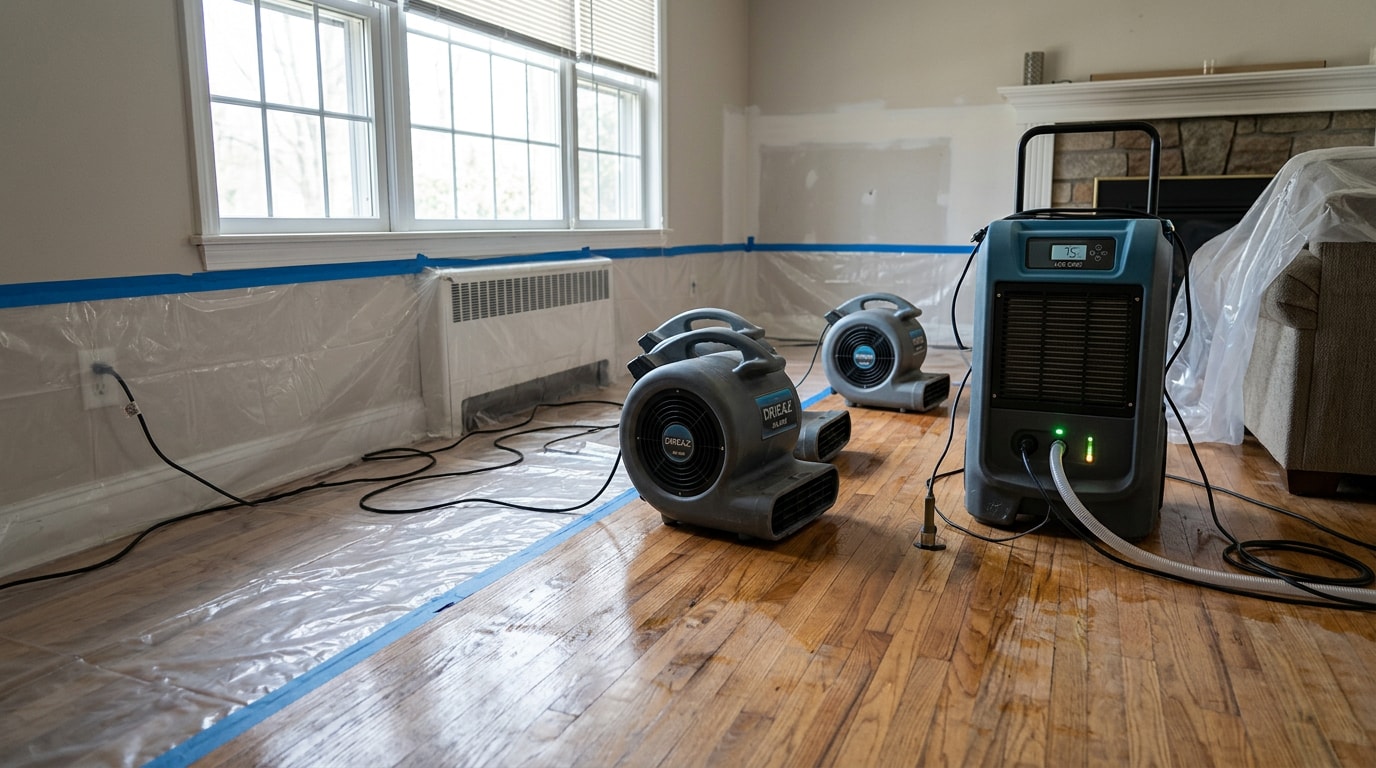
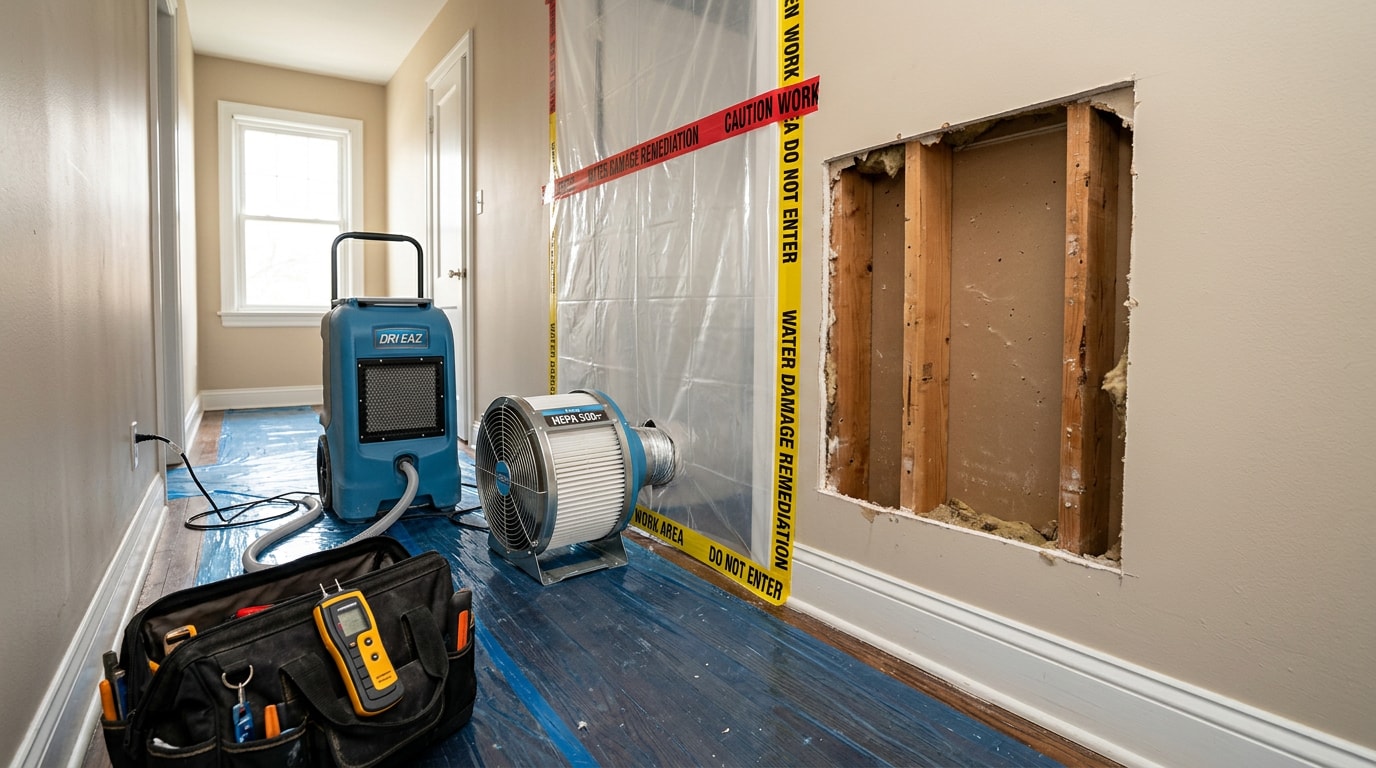
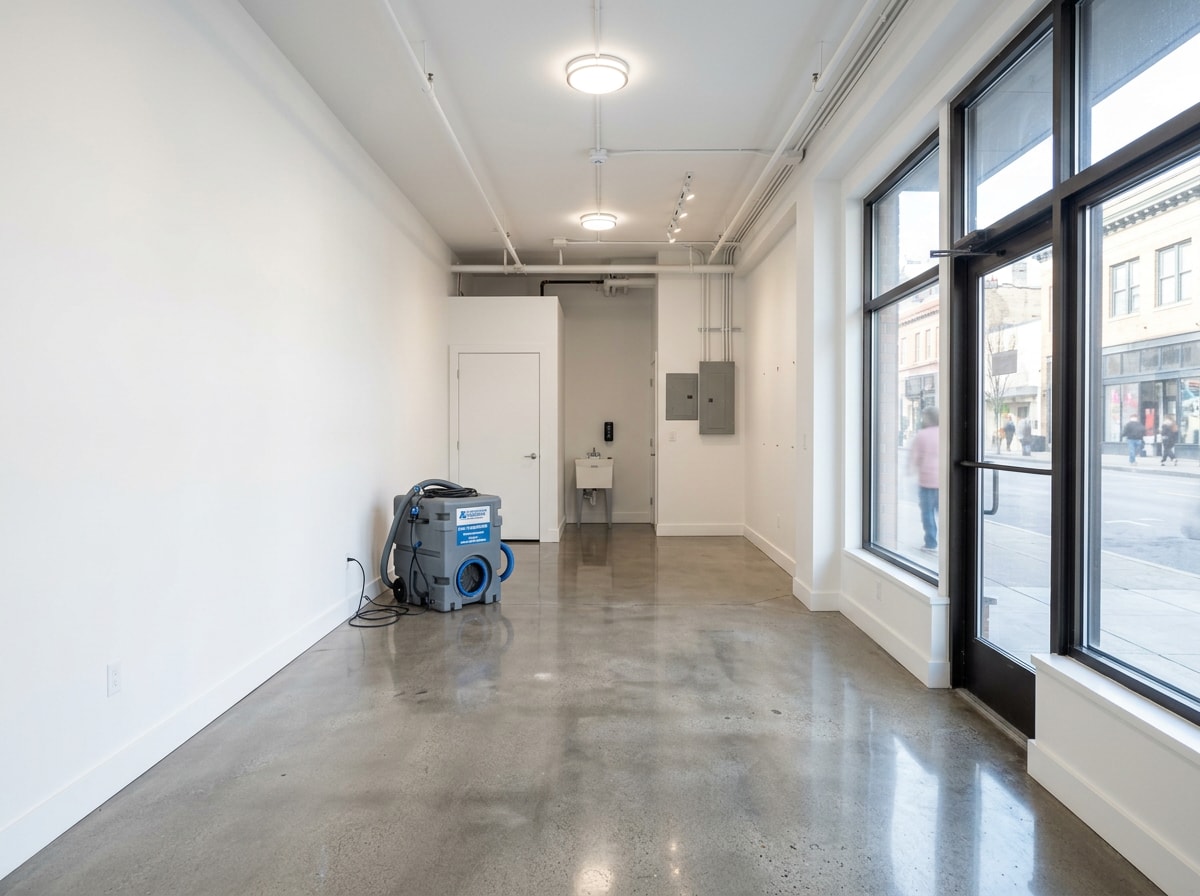
Firefighting efforts often leave behind as much water damage as the fire itself, and that water has to come out fast. Structural drying and dehumidification, paired with thorough water extraction, restore structural integrity and prevent a second disaster from developing inside the walls.
Both the EPA and CDC point to the same benchmark for this step. Clean up and dry out the building quickly, within 24 to 48 hours. Waiting longer turns a straightforward drying job into a mold remediation project, which is why structural drying should begin the same day water is extracted, not after the insurance adjuster's next visit.
If moisture has worked its way into a crawlspace or subfloor after a fire, it's worth having that checked separately our Clemson, SC crews often find hidden dampness there weeks after a fire looks "done" on the main floor. Left untreated, that moisture can lead to the kind of mold growth covered in our mold abatement services.
What's Included in Our Fire Damage Cleanup Service
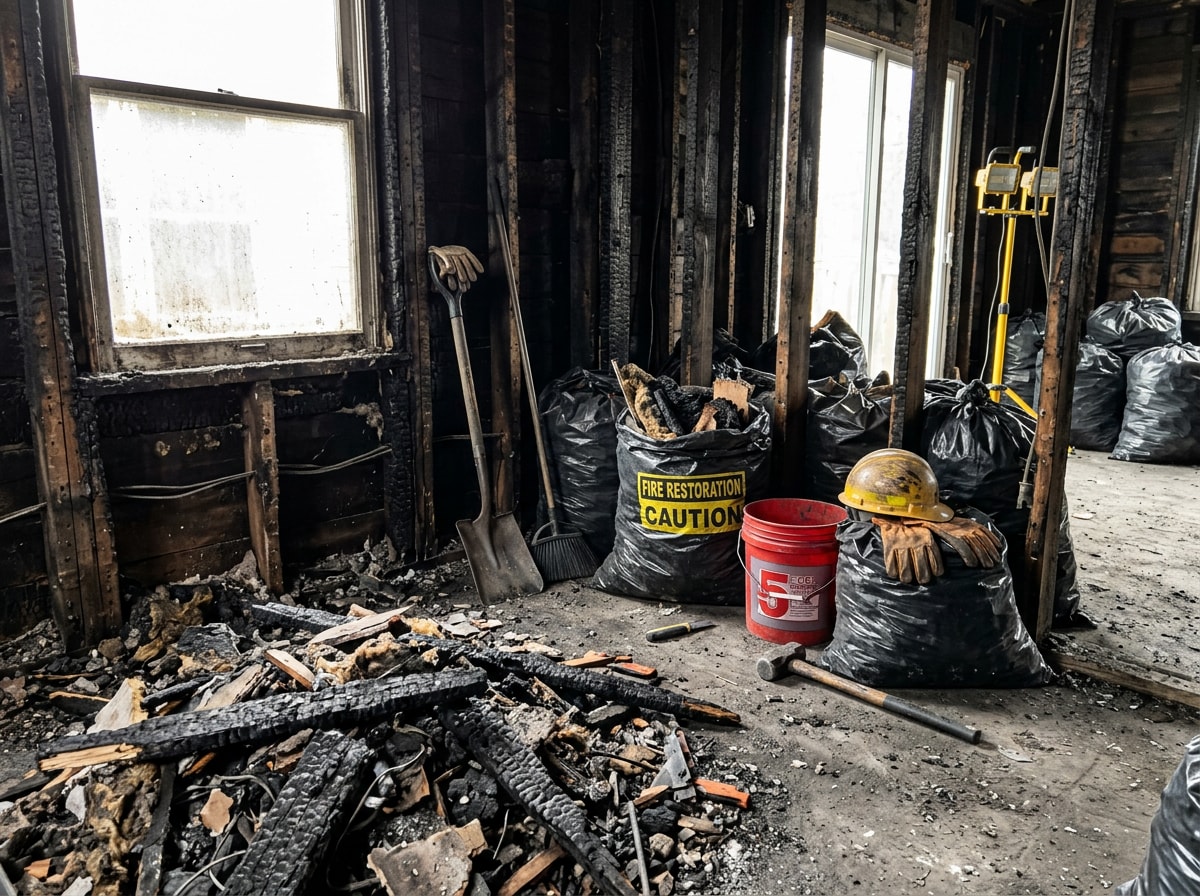
Fire debris removal covers more than hauling away ash. A typical cleanup scope includes:
- Removal of fire-damaged furniture, appliances, and personal items
- Safe disposal of hazardous debris and waste
- Cleanup of soot and ash from walls, ceilings, and hard surfaces
- Removal of fire-damaged structural materials and framework debris
- Post-fire debris removal for both residential and commercial properties
- Coordination with the water damage restoration team when firefighting water is involved
Indoor Air Quality After a Fire: Why Odor Removal Isn't Optional
Smoke exposure doesn't end when the visible soot is gone. During a wildfire, smoke can make the outdoor air unhealthy to breathe, and some of that smoke from outdoors can enter your home and make it unhealthy to breathe indoor air, too. The same particle buildup happens after a structure fire, just concentrated indoors instead of drifting in from outside.
This is one reason masking smoke odor with air fresheners doesn't work for long. Trapped particles keep off-gassing from porous materials like drywall, carpet padding, and upholstery until they're physically removed, not just covered up.
Why Choose Johnstone Restoration for Fire & Smoke Damage in Clemson, SC
Certified restoration specialists, advanced drying and cleaning equipment, and genuine 24/7 availability set a reliable local Clemson restoration company apart from a general contractor working fire jobs on the side. Fast cleanup and drying limit secondary damage, and direct coordination with your insurance adjuster takes one more burden off a stressful week.
If your fire also caused flooring, cabinet, or countertop damage during cleanup or demolition, our kitchen and bathroom remodeling team can rebuild those spaces once drying and odor treatment are complete. You can also see how a similar emergency played out in our write-up on fire water restoration in Greer, SC, which walks through a comparable timeline from first call to final walkthrough.
A Note From Our Restoration Team
Our fire and smoke restoration technicians are trained to the IICRC's current standards for fire, smoke, and water damage response. We've worked fire losses throughout Pickens County, from student rentals near campus to older homes along Issaqueena Trail, and the pattern is consistent: the properties that recover fastest are the ones where drying and odor treatment start within the first day. Questions about your specific situation can go straight to our contact page, or start from our homepage to see our full service area.
FAQ
Do you offer 24/7 emergency services in Clemson, SC?
Yes. Restoration teams are available around the clock to respond to fire, smoke, water, and mold emergencies throughout the Clemson area, including nights, weekends, and holidays.
How quickly can you respond to a fire in Clemson?
Response times depend on conditions, but crews typically mobilize within hours of the call. Faster response limits how far soot, smoke odor, and firefighting water spread through the structure.
Do you work with insurance companies?
Yes. Insurance claims assistance is part of the process, including documenting damage, itemizing losses, and communicating directly with your adjuster to keep the claim moving.
Do I need a permit for fire damage restoration in Clemson?
It depends on the scope of work. Cleaning, soot removal, and odor treatment generally don't require permits, but structural rebuilding, electrical work, or framing repairs usually do. Your restoration contractor should handle the permit application as part of the rebuild.
How long does the restoration process take?
Timelines depend on the extent of damage. Most residential projects finish within a few days to about a week for cleanup and drying; full reconstruction after major structural damage takes longer.
How long does smoke smell last after a fire?
Smoke odor can linger for weeks or months because smoke particles embed in porous materials like drywall, insulation, and upholstery. Professional odor removal clears trapped particles instead of just masking the smell, which is why it works better than air fresheners or ozone sprays alone.
Is it safe to clean up fire damage myself?
For light soot on hard, non-porous surfaces, cautious DIY cleanup is sometimes possible. For anything involving structural soot, HVAC contamination, or firefighting water, professional assessment is safer and usually required by insurance before a claim is paid out.