
Commercial mold restoration in Anderson, SC protects your building, your staff, and your revenue before a slow leak turns into a six-figure reconstruction project. Anderson's humid subtropical climate keeps indoor moisture elevated for most of the year, and that moisture is exactly what turns a small water intrusion into an active mold colony behind your walls. Below is what the remediation process actually involves, what it costs, and how to vet a provider before you sign anything.
Signs Your Anderson, SC Business Has a Mold Problem
A persistent musty odor, visible growth on walls or ceilings, and stained or warped flooring are the three clearest warning signs in a commercial property. These indicators usually show up before mold becomes a widespread problem, which is why catching them early matters so much.
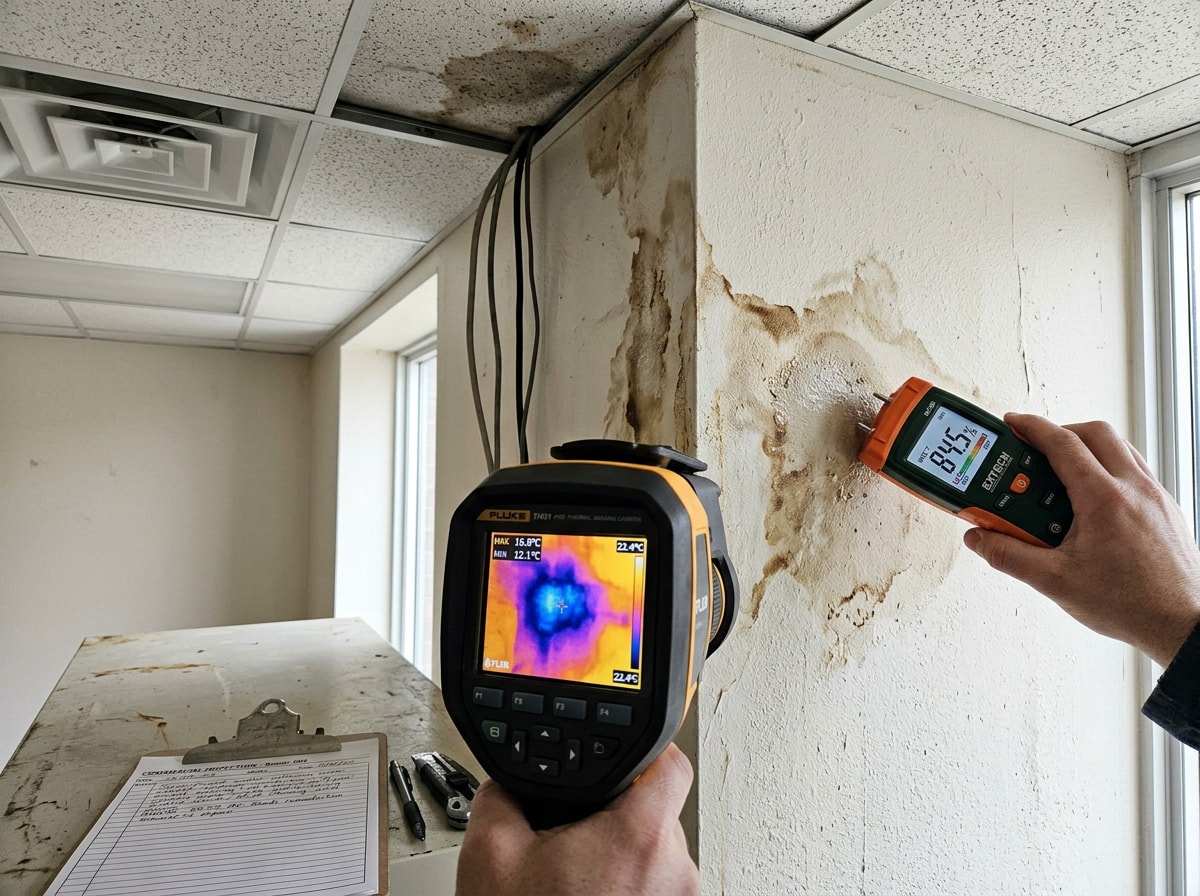
A musty smell without visible staining almost always means moisture is trapped behind a wall, under flooring, or inside a mechanical space. Technicians rely on thermal imaging and moisture meters rather than guesswork to pinpoint exactly where that moisture is coming from.
Here's what to watch for during a routine walkthrough:
- Musty or earthy odor in a specific room, hallway, or storage area
- Discolored ceiling tiles, warped baseboards, or bubbling paint
- A recent roof leak, plumbing failure, or HVAC condensation issue that wasn't fully dried
- Employees reporting stuffy noses, coughing, or irritated eyes concentrated in one part of the building
That last point isn't just an annoyance. Exposure to damp and moldy environments may cause a variety of health effects, including a stuffy nose, sore throat, coughing or wheezing, burning eyes, or skin rash, and people with asthma or mold allergies may have severe reactions , according to the CDC. If more than one person in the same area is reporting symptoms, treat it as a mold lead, not a coincidence.
Why Anderson's Climate Makes Commercial Mold a Recurring Risk
This isn't a one-time problem for most Anderson businesses — it's a seasonal one. Anderson County's 1991-2020 climate normals show average annual precipitation of roughly 46.3 inches , according to the South Carolina State Climatology Office, and summer humidity regularly sits in the high 60s to low 70s. That combination keeps crawlspaces, roof assemblies, and HVAC systems wet longer than they would be in a drier climate.
We see the pattern play out the same way every summer: a roof leak or AC condensation line gets patched but never fully dried out, and three months later there's a ceiling stain that's spread across an entire conference room. In older commercial buildings around downtown Anderson, crawlspace moisture is often the unseen driver — if your building sits over an unencapsulated crawlspace, crawlspace encapsulation is frequently part of a long-term fix, not just the mold cleanup itself.
Mold Abatement vs. Containment vs. Full Remediation
These three terms get used interchangeably in sales calls, but they're not the same service:
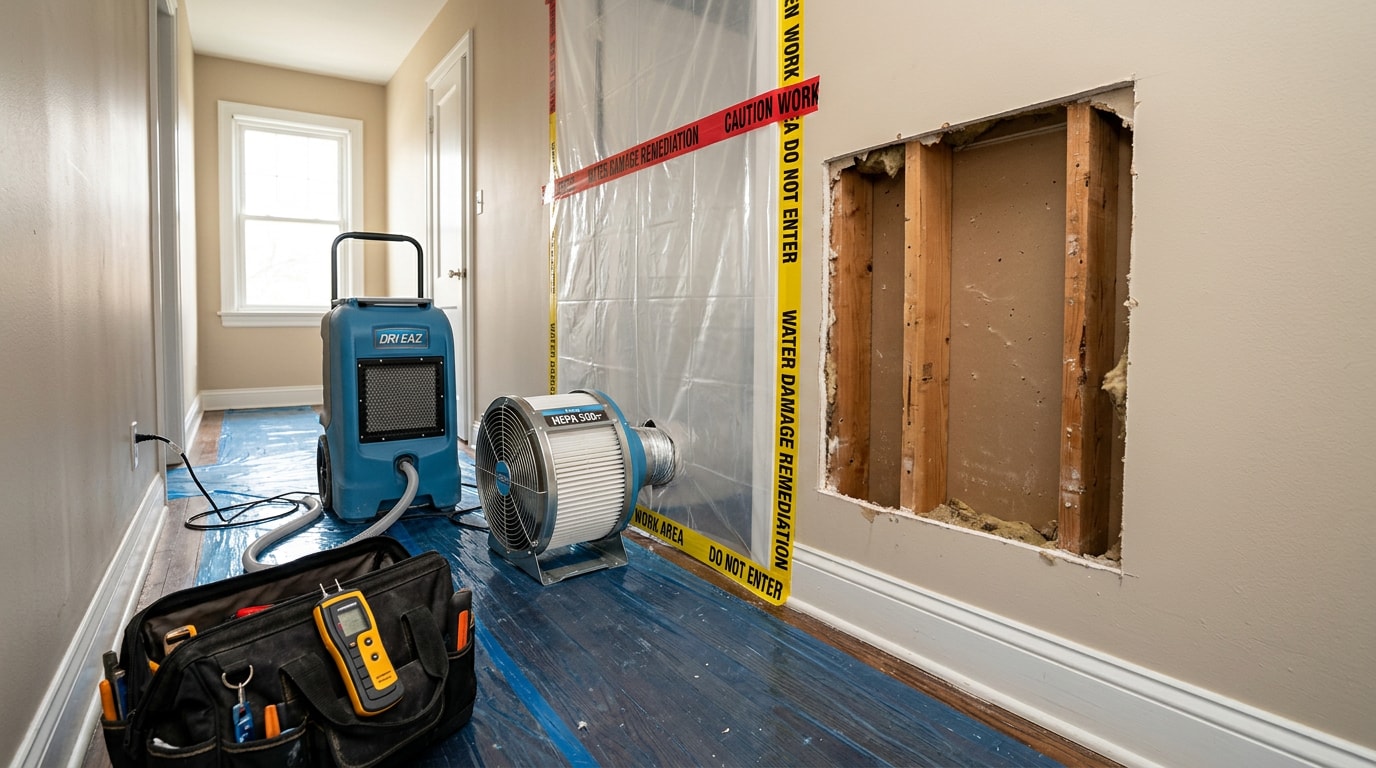
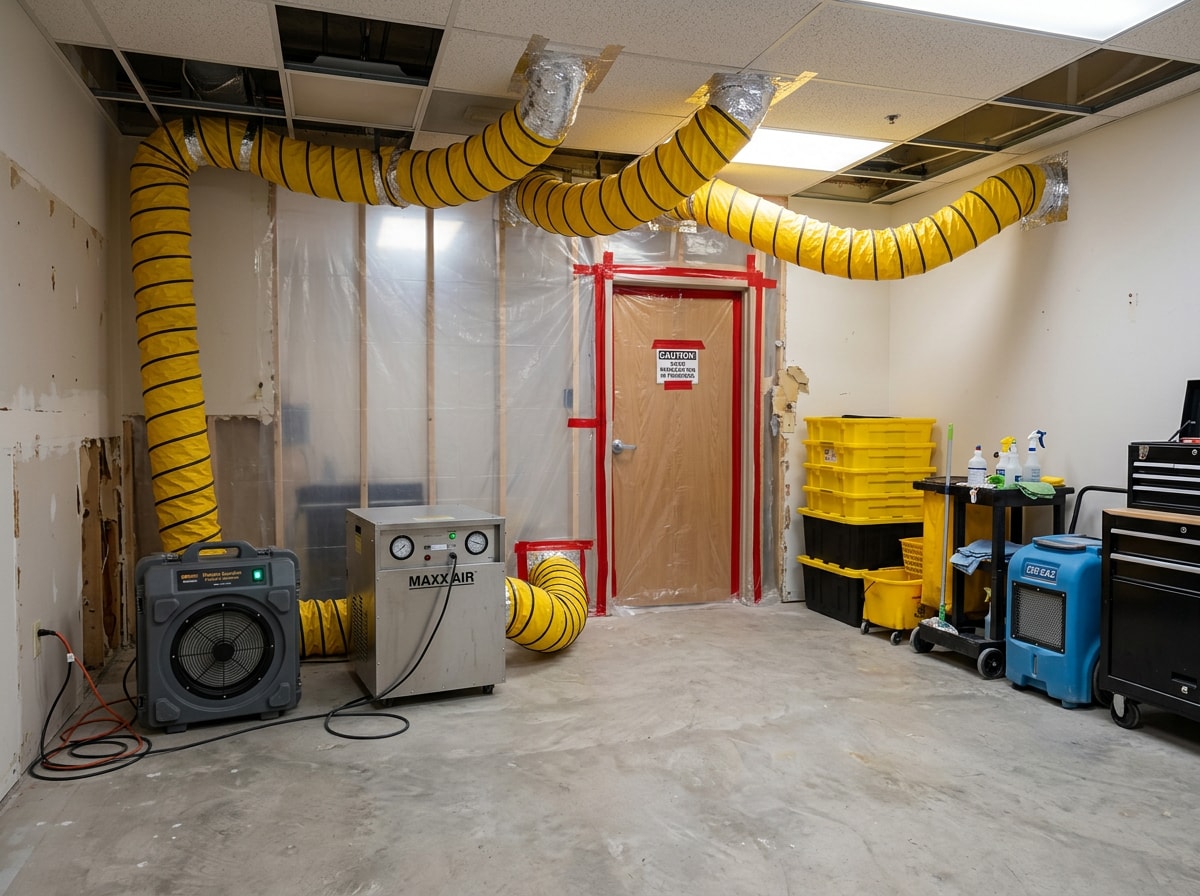
- Containment-only response: Isolates an active outbreak with barriers and negative air pressure to stop spread. It doesn't touch the root moisture source, so it's a stopgap, not a fix.
- Mold abatement: Removes existing growth and prevents regrowth within a specific contained area, restoring safe conditions without full reconstruction.
- Full mold remediation: A complete process covering inspection, material removal, antimicrobial treatment, structural cleaning, and correction of the underlying moisture source across the whole affected space.
If a provider only quotes "containment," ask what happens to the moisture source afterward. Our mold abatement team in Anderson builds every scope around fixing that source first, because skipping it is the single most common reason mold comes back within a few months.
The Commercial Mold Remediation Process, Step by Step
Once a provider is on-site, the process generally runs through three stages: inspection, removal, and cleaning.
1. Inspection and Hidden Moisture Detection
Technicians physically examine the property for visible mold while using thermal imaging and moisture meters to find hidden water sources behind walls, under flooring, or inside mechanical spaces. This step sets the entire scope of work — skip it, and you risk treating only what's visible while the actual source keeps feeding regrowth.
2. Removing Mold and Mold-Damaged Materials
Antifungal and antimicrobial treatments work well on non-porous surfaces like metal, glass, and sealed concrete. They don't work once mold has grown into a porous material's structure.
Absorbent or porous materials, such as ceiling tiles and carpet, may have to be thrown away if they become moldy, since mold can grow into the empty spaces and crevices of porous materials and may be difficult or impossible to remove completely , per EPA guidance. In commercial spaces, that usually means removing sections of drywall, insulation, and carpet that sat wet behind a wall for weeks before anyone noticed.
3. Cleaning and Air Quality Restoration
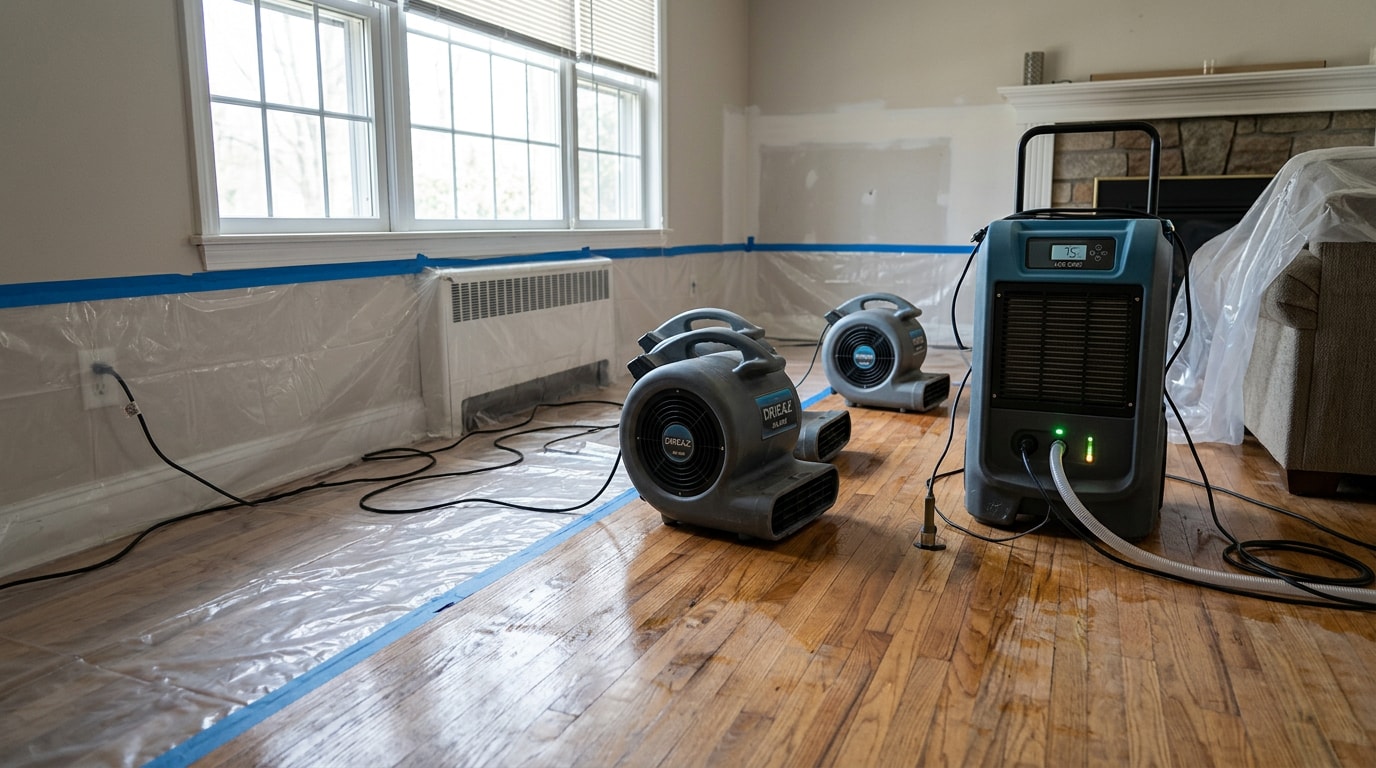
Structural cleaning covers flooring, framing, fixtures, and HVAC ductwork affected by growth, which helps restore indoor air quality throughout the property. Structural drying equipment runs through this phase to make sure materials don't just look clean — they're actually dry enough to resist regrowth.
Porous contents like curtains, documents, and décor get extra attention here, since they can retain spores even after surrounding surfaces look clean.
What's Included in Commercial Mold Restoration Services
Mold rarely has one single cause. It enters a commercial building through roof leaks, plumbing failures, poor ventilation, or storm damage — and sometimes a combination of all four. A full-service provider should be able to handle whatever caused it, not just the mold itself.
A complete commercial mold restoration scope typically includes:
- Mold inspection and moisture mapping
- Water extraction if standing water is present
- Mold abatement and material removal
- Structural drying and dehumidification
- HVAC and ductwork cleaning
- Post-remediation verification
Because a roof failure can bring water damage and mold together in the same project, it helps to work with a team under our water damage restoration umbrella rather than a mold-only outfit that has to subcontract the rest.
What Commercial Mold Remediation Costs in Anderson, SC
Cost depends on square footage, how many materials are affected, and whether HVAC systems are involved. These are typical ranges, not a quote — an on-site inspection is the only way to get accurate pricing for your building.
| Project Scope | Typical Affected Area | Estimated Cost Range | Typical Timeline |
|---|---|---|---|
| Minor, contained | Under 10 sq ft | $500 – $1,500 | 1–2 days |
| Moderate | 10–100 sq ft | $1,500 – $6,000 | 3–5 days |
| Large-scale commercial | 100+ sq ft, HVAC or multiple rooms involved | $10,000+ | 1–3 weeks |
Delaying a known mold problem rarely saves money. An office that leaves a slow roof leak unaddressed for a few months can turn a small ceiling stain into a full HVAC and drywall replacement project, with downtime costs stacking on top of the remediation bill itself.
How to Choose a Commercial Mold Restoration Provider in Anderson, SC
Not every company that advertises "mold removal" follows the same standards. Look for these before signing a contract:
- IICRC S520 compliance.
The IICRC S520 Standard describes the procedures to be followed and the precautions to be taken when performing mold remediation in residential, commercial, and institutional buildings , according to IICRC. A provider that can't speak to this standard shouldn't be handling a commercial loss.
- Written scope of work that separates inspection, removal, and cleaning rather than a vague flat fee.
- Post-remediation verification, confirming moisture is actually resolved, not just masked.
- Experience with commercial occupancy, including containment plans that let employees and customers stay safe if the business needs to stay open.
- A real local address and licensing you can verify, not just a call center number.
Request a free estimate and ask the provider to walk you through each of these points before work starts.
Why Business Owners Across Anderson Trust Johnstone Restoration
Every commercial space responds to moisture differently, and Anderson's mix of older downtown buildings, newer retail centers, and industrial space along I-85 means no two mold calls look alike. Our crews have worked enough of these properties to know that a slow HVAC drip in a 1960s office building behaves nothing like a storm-driven roof leak in a strip mall built in 2015 — the inspection has to account for that from day one.
Certified technicians, clear documentation, and a follow-up visit to confirm moisture is actually gone are standard on every job, not an upsell. You can see our full range of restoration and remodeling capabilities on the Johnstone Restoration homepage, or check service details specific to Anderson, SC. If you're also comparing providers in the broader Upstate area, our guide to mold testing and remediation near Greenville, SC covers what a proper inspection should include no matter which city you're in.
FAQ
What's included in commercial mold restoration services?
A full scope typically includes inspection and moisture mapping, water extraction if needed, mold abatement and material removal, structural drying, HVAC cleaning, and a post-remediation check. Teams equipped for large-loss work can scale that scope from a single office suite to a multi-floor building.
How much does commercial mold remediation cost in Anderson, SC?
Minor, contained jobs typically run a few hundred to a few thousand dollars. Large-scale commercial projects involving extensive material removal or HVAC contamination often exceed $10,000. An on-site inspection gives the most accurate number for your specific property.
How long does commercial mold remediation take?
Small, contained areas can often be treated in a day or two. Larger infestations, or ones involving HVAC systems, can take a week or more, and extensive commercial square footage can push that timeline further.
Can my business stay open during mold remediation?
Often, yes, depending on the severity of the mold and the containment plan in place. Technicians use barriers and negative air pressure to isolate work areas, which helps minimize disruption while keeping employees and customers safe.
Does insurance cover commercial mold damage?
It depends on the cause. Mold damage tied to a sudden, covered event like a burst pipe is often covered, while mold caused by long-term neglect or unresolved humidity is frequently excluded. Document the problem and your policy's mold provisions as soon as you spot an issue.
Do I need a mold test before remediation starts?
Not always. Visible growth paired with a musty odor is usually enough to define a scope of work. Post-remediation clearance testing, however, is common practice to confirm the cleanup actually worked before the area is reopened.