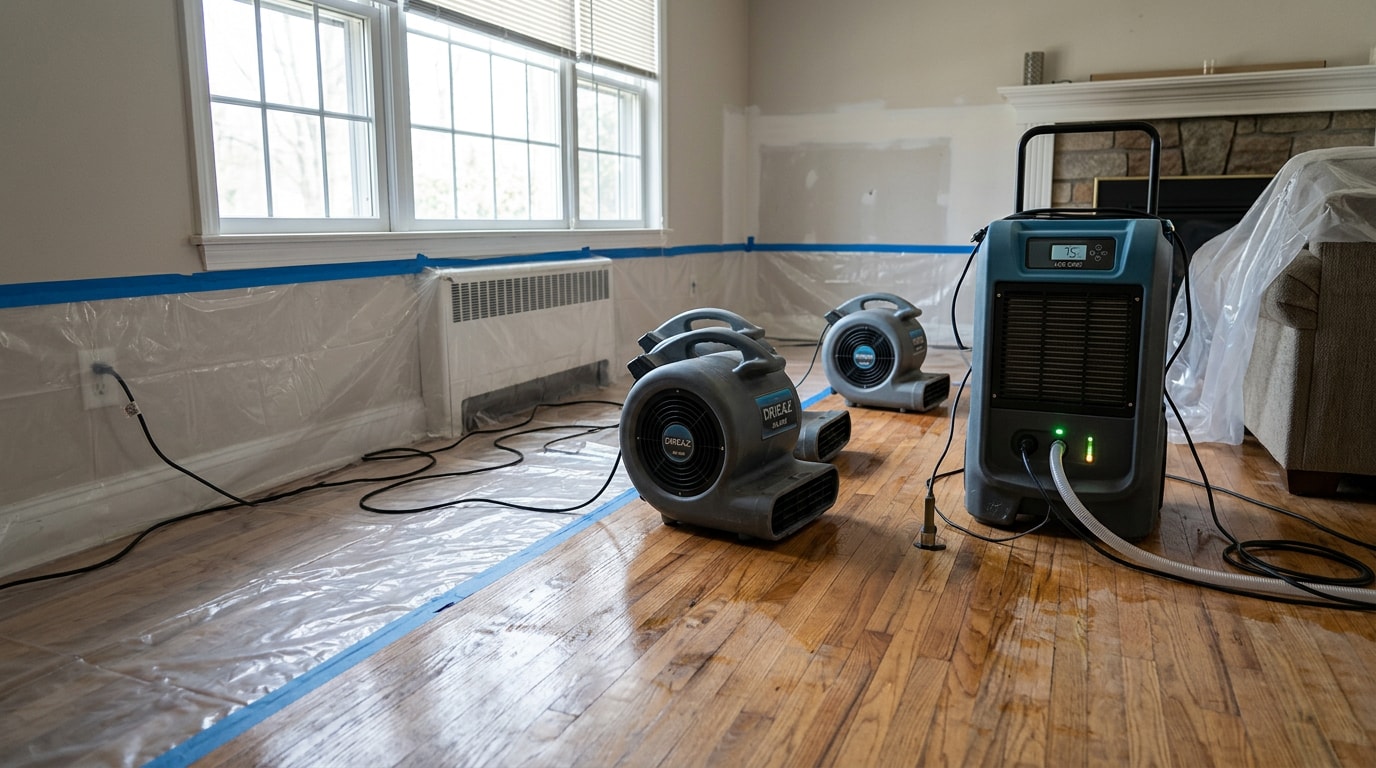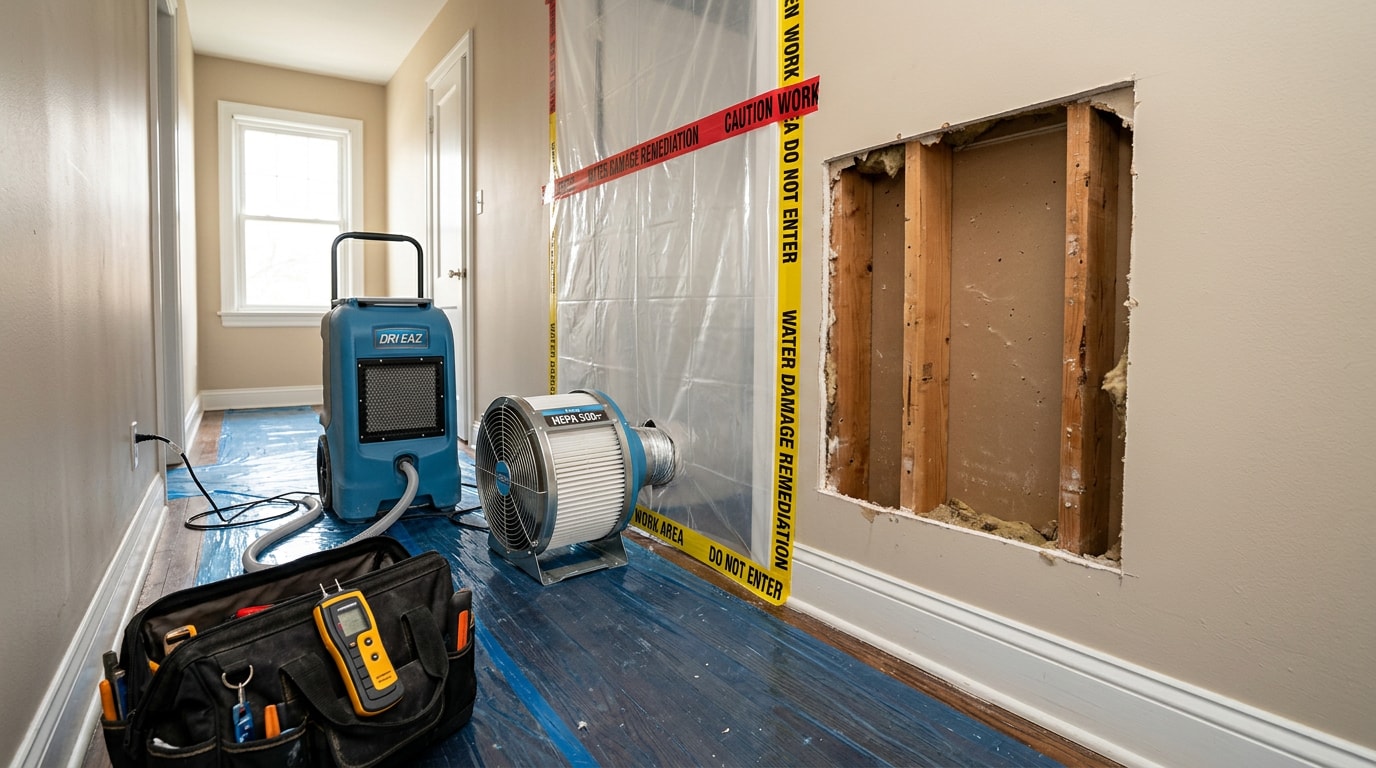
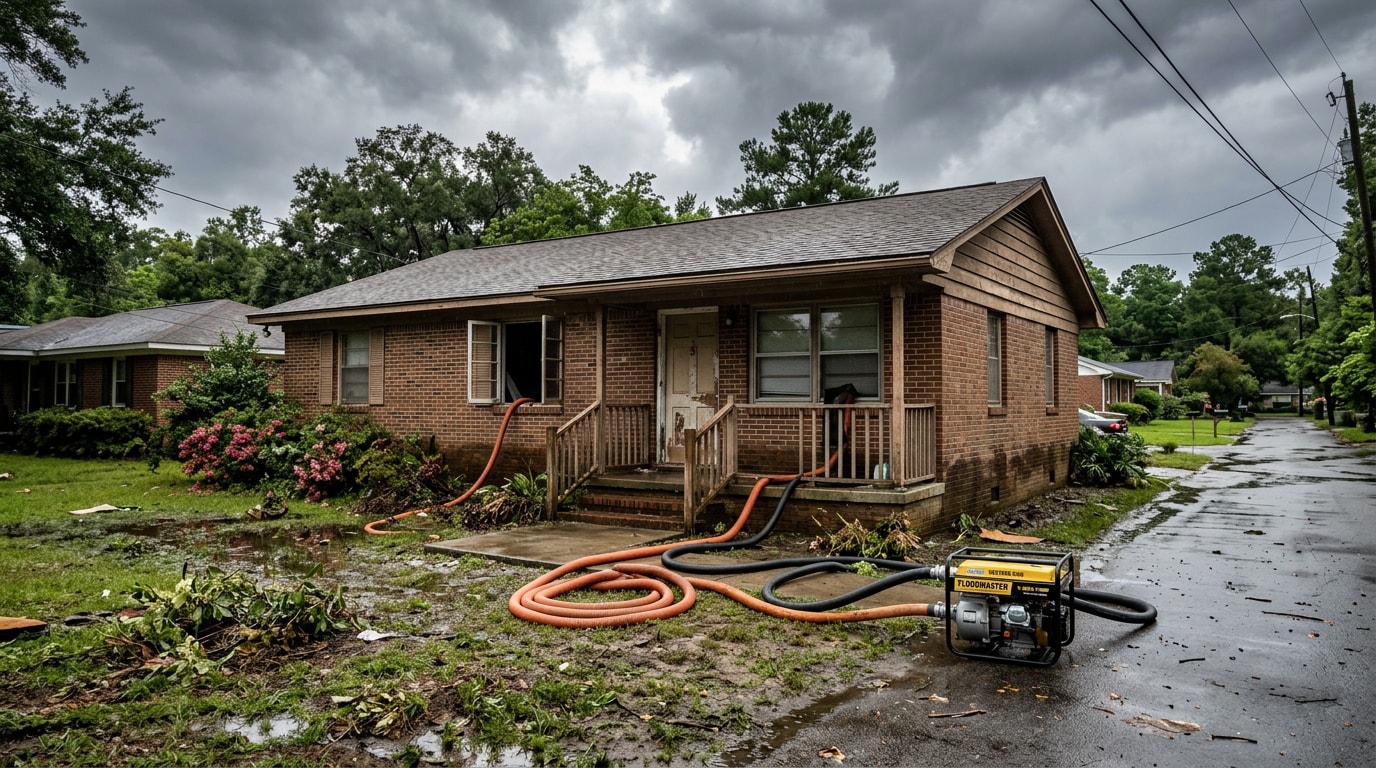
Flood drying in Greenville, SC has to start fast, because the Upstate's humidity gives mold a head start that drier climates don't deal with. A flash storm, a burst pipe, or a creek that jumps its bank can soak a structure in under an hour, but drying it correctly takes days of controlled airflow and dehumidification. This guide walks through exactly what to do first, what professional crews do differently, and why timing matters more here than almost anywhere else in the Southeast.
What Flood Drying in Greenville, SC Actually Involves
Flood drying is not just pumping out standing water. It's the process of removing moisture from flooring, drywall, framing, and subfloor materials until a structure returns to a normal, pre-loss moisture level.
That process includes assessment, extraction, controlled airflow, dehumidification, and daily moisture monitoring until the materials test dry, not just look dry.
On jobs across Greenville's older neighborhoods near the Reedy River, flooring and baseboards often look fine on the surface while the wall cavity behind them stays wet for days without the right equipment running. That's the gap between a DIY cleanup and a proper drying job, and it's why a certified water damage restoration team checks moisture content, not just appearance, before calling a space dry.
Look for technicians who are IICRC certified. That credential means formal training in water damage restoration standards and ongoing education as drying techniques and equipment evolve.
What to Do in the First 24 Hours After a Flood
The first day after water enters your property determines how big the job becomes. The CDC recommends cleaning up and drying out a home within 24 to 48 hours after a flood if possible , and that window is tighter than most homeowners expect.
Here's the order that actually limits damage:
- Shut off electricity and water to the affected area if you can do so safely.
- Remove standing water with a wet/dry vacuum or towels for small amounts; call a crew for anything beyond a few inches.
- Move valuables and furniture to higher, dry ground, starting with anything irreplaceable.
- Photograph everything before you move or discard items, for your insurance claim.
- Call a restoration team within the first few hours, not days, especially for whole-room or whole-floor flooding.
If you're reading this with water already on the floor, contact our team for a free estimate before you start tearing anything out. Removing the wrong material too early can complicate an insurance claim.
Why Greenville's Humidity Changes the Drying Timeline
Here's where a lot of generic flood advice falls short for the Upstate. National guidance often tells homeowners to open windows and run fans to speed drying. That works well in dry climates, but Greenville's summer dew points frequently sit close to indoor air levels. Opening windows in July can pull as much moisture in as it pushes out.
Controlled drying, meaning sealed rooms with air movers and commercial dehumidifiers pulling moisture out mechanically, works more reliably here than passive airflow does. This is one reason local experience matters more than a generic drying checklist pulled from a national site.
Greenville's flood risk isn't only about storms, either. The city's mix of hills, creeks, and the Reedy River watershed means groundwater and flash flooding can both drive water into a structure, often from different directions in the same storm.
South Carolina's capacity for extreme rainfall is well documented. During the October 2015 flooding event, all-time rainfall records were shattered across the state, with totals ranging from 10 inches to more than 26 inches in parts of the Midlands and coast. That kind of volume is an outlier, but it's a reminder of how quickly Upstate drainage systems can be overwhelmed in a bad storm season.
Residential vs. Commercial Flood Drying
The core steps are the same, but the scale and pressure differ. Here's how the two compare in practice:
| Factor | Residential Flood Drying | Commercial Flood Drying |
|---|---|---|
| Primary goal | Protect structure and belongings | Minimize downtime and lost revenue |
| Equipment scale | Standard air movers and dehumidifiers | Truck-mounted pumps, high-capacity extraction units |
| Crew size | Typically 1 to 3 technicians | Multiple crews working simultaneously |
| Timeline pressure | Days, driven by family displacement | Hours, driven by reopening deadlines |
| Common content step | Separating salvageable belongings | Content pack-out for offsite cleaning |
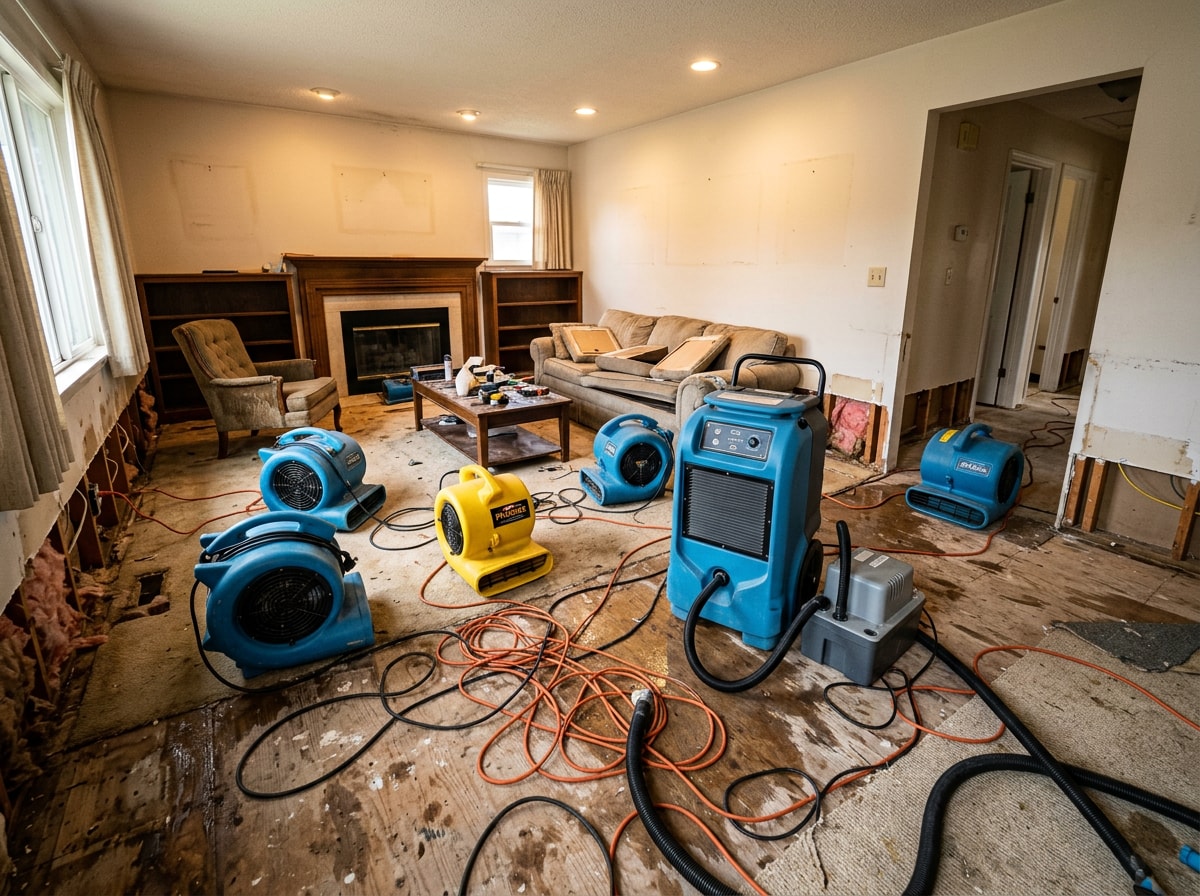
For a flooded home, crews extract water from flooring, carpet, and padding first since these materials hold moisture the longest. Water extraction equipment runs while valuables are moved out of the affected space, then air movers and dehumidifiers take over for structural drying.
For a flooded business, speed is the priority from minute one. Truck-mounted pumps and high-capacity extraction units pull large volumes of water out fast, limiting how far it spreads through inventory and flooring before containment goes up to protect unaffected areas.
The Professional Flood Drying Process: Assess, Mitigate, Restore
Professional flood drying follows three stages. Each one builds on the last, moving a property from flooded to fully dry and repaired.
Assess
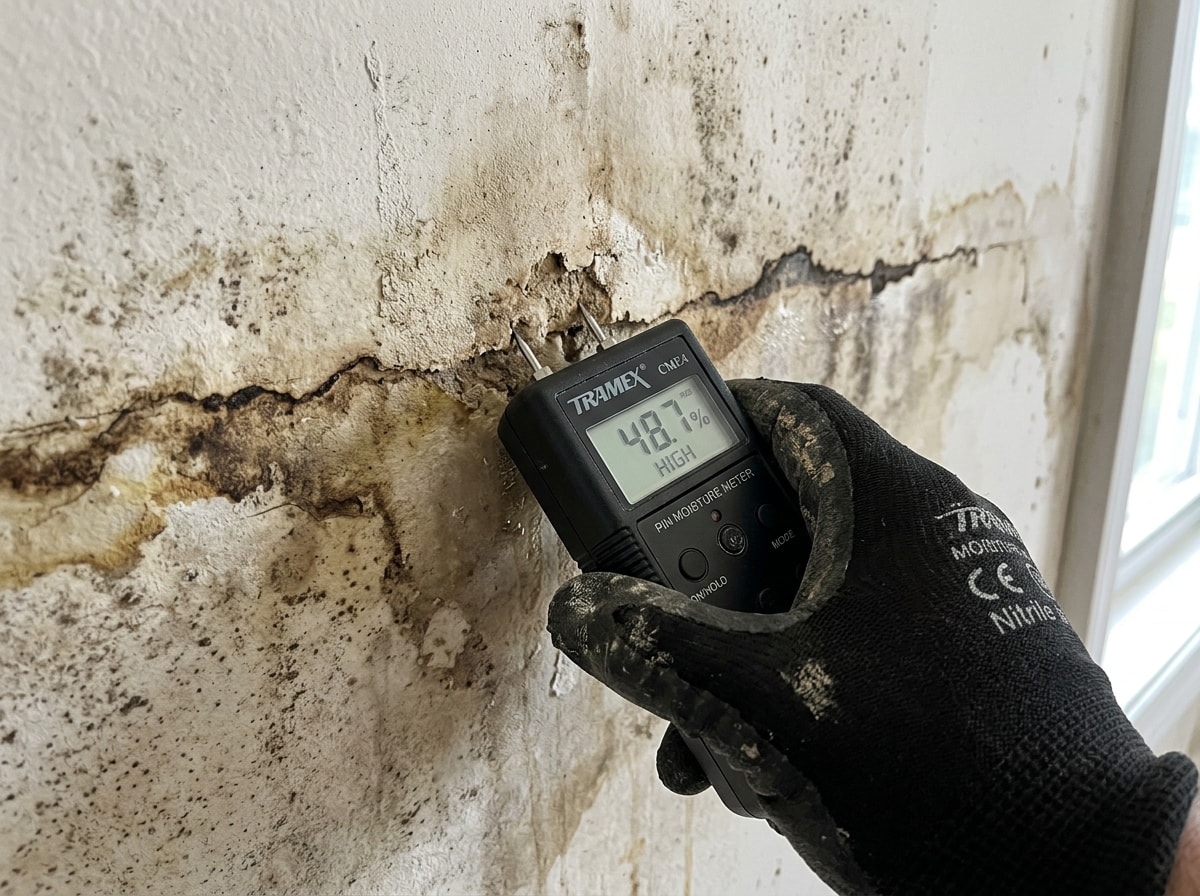
Technicians use moisture meters, hygrometers, and thermal imaging cameras to find water hidden behind walls or under flooring. These readings, covering temperature and humidity, determine exactly how many air movers and dehumidifiers the drying plan needs.
Mitigate
Water mitigation stops further damage: extracting remaining water, tarping exposed roof areas, and applying antimicrobial treatments to discourage mold growth before it starts. For rooms with heavy damage, a content pack-out moves furniture and belongings offsite for cleaning while the space dries.
Restore
Air movers and dehumidifiers run continuously as part of a full structural drying setup, with daily moisture checks confirming levels are dropping toward the target dry standard. Once materials test dry, repairs begin, replacing drywall, flooring, or trim as needed. If moisture sat long enough for mold to take hold, that shifts into a separate mold abatement scope before repairs can finish.
Crawlspace and Basement Flooding in Greenville Homes
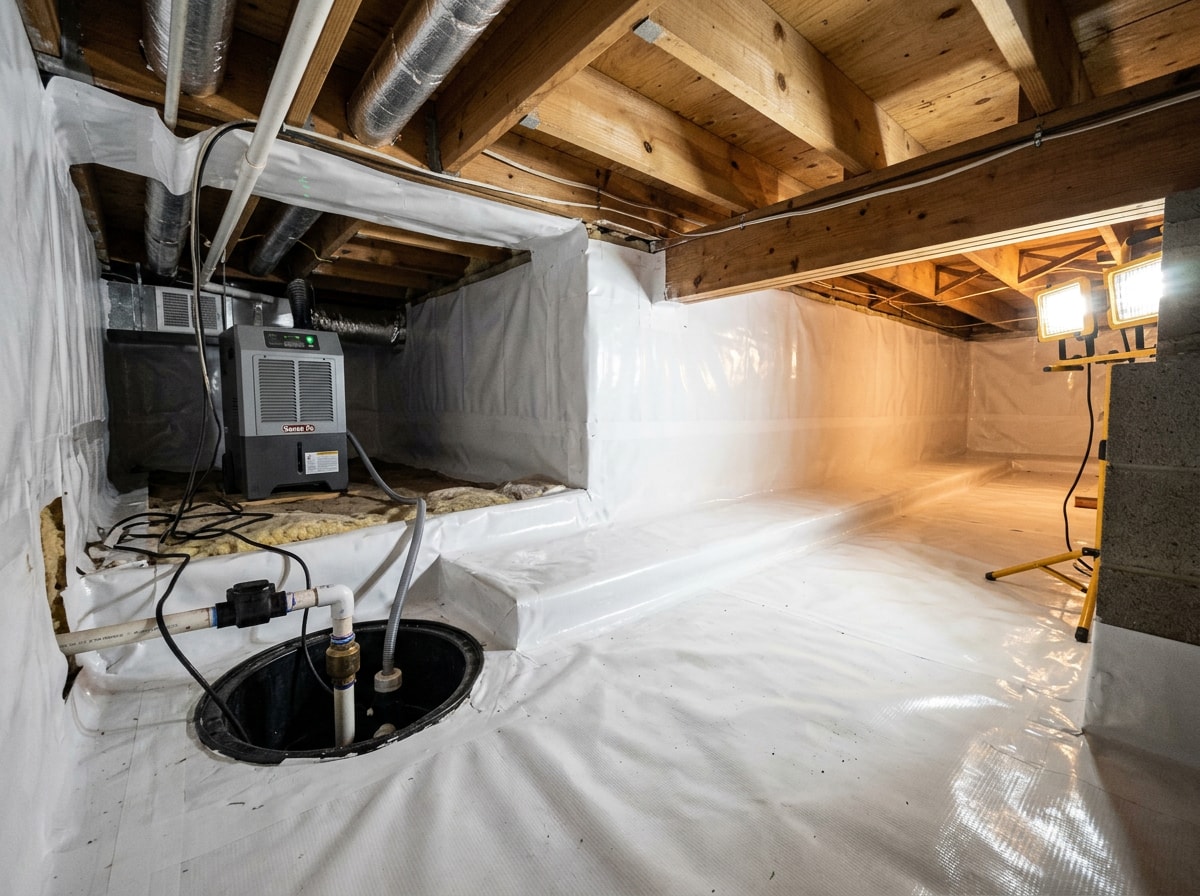
Greenville's clay-heavy soil doesn't drain quickly, which means crawlspaces and basements often take on water from groundwater seepage even when there's no visible flooding above ground. That standing moisture underneath a home can drive humidity and mold problems into the living space for months if it's never addressed.
Drying out a wet crawlspace is only a short-term fix if the water keeps coming back. Crawlspace waterproofing and crawlspace drainage installation address the source, not just the symptom, and are worth evaluating after any crawlspace flood event, not just a one-time pump-out. For a closer look at basement-specific water problems in the region, see our guide on basement flooding solutions near Mauldin, SC.
Flood Insurance and Documentation in Greenville, SC
Restoration companies typically document damage with photos, moisture readings, and detailed scope-of-work reports that support a flood insurance claim. Many also communicate directly with adjusters, which can speed up approval and reduce back-and-forth for the homeowner.
It's worth understanding your policy before water damage happens. Standard homeowners insurance generally covers sudden, accidental water damage like a burst pipe, but it typically excludes flooding caused by external sources like storms or rising water. Congress created the National Flood Insurance Program in 1968 with two goals: protect people from flooding and reduce future flood damage , and separate flood coverage through that program is usually required to cover external flooding. Terms vary by policy, so confirm coverage details with your provider rather than assuming. For an overview of how the program works, see FloodSmart.gov's NFIP guide.
A good restoration partner means less guesswork during an already stressful week. Get a free estimate and our team can walk through documentation and next steps for your specific claim.
Service Areas Near Greenville, SC
Flood drying needs don't stop at the city line. Johnstone Restoration serves Greenville, SC and the surrounding Upstate, including Simpsonville, Mauldin, Greer, Anderson, Travelers Rest, Easley, and Clemson. Visit our homepage to see our full service lineup.
FAQ
How Do You Dry a House After a Flood?
Extract standing water first, then run air movers and dehumidifiers to pull moisture from flooring, drywall, and framing. Monitor moisture levels daily until materials return to a normal, dry reading, not just a dry appearance.
Is Flood Damage Covered by Insurance?
Usually not under a standard homeowners policy. External flooding typically requires separate flood insurance, often through the NFIP. Confirm your specific coverage with your insurer before a storm hits, not after.
How Long Does It Take to Fix Flood Damage?
Most repairs take a few days to several weeks, depending on the size of the affected area, water contamination category, and materials involved. A single room dries and repairs faster than an entire flooded basement or commercial space.
How Much Does Flood Damage Restoration Cost in Greenville, SC?
Cost depends on square footage, water category, and how long materials sat wet before drying started. A single-room water extraction and dry-out costs far less than a whole-floor flood that requires drywall and flooring replacement; a documented, itemized estimate from a local crew is the only reliable way to get a real number for your property.
What's the Difference Between Water Mitigation and Water Restoration?
Mitigation is the emergency response: extracting water and drying the structure to stop damage from spreading. Restoration is the repair phase that follows, replacing damaged materials and returning the space to its pre-flood condition. For a fuller breakdown, see our guide on water mitigation vs. remediation in Simpsonville, SC.
What Year Was the 100-Year Flood in South Carolina?
South Carolina's most widely referenced modern flood event happened in October 2015, when record rainfall between October 1 and 5 caused widespread flooding across much of the state, with all-time rainfall records shattered from the Midlands to the coast .
Are Sandbags Helpful During a Flood?
Sandbags can redirect or slow shallow water flow around entry points, but they're not a complete flood barrier. Use them as a short-term measure alongside other precautions, not as a standalone defense.
Reviewed by the IICRC-certified restoration team at Johnstone Restoration, serving Greenville, SC and the Upstate. Questions about a specific flood loss? Contact us for a free estimate.